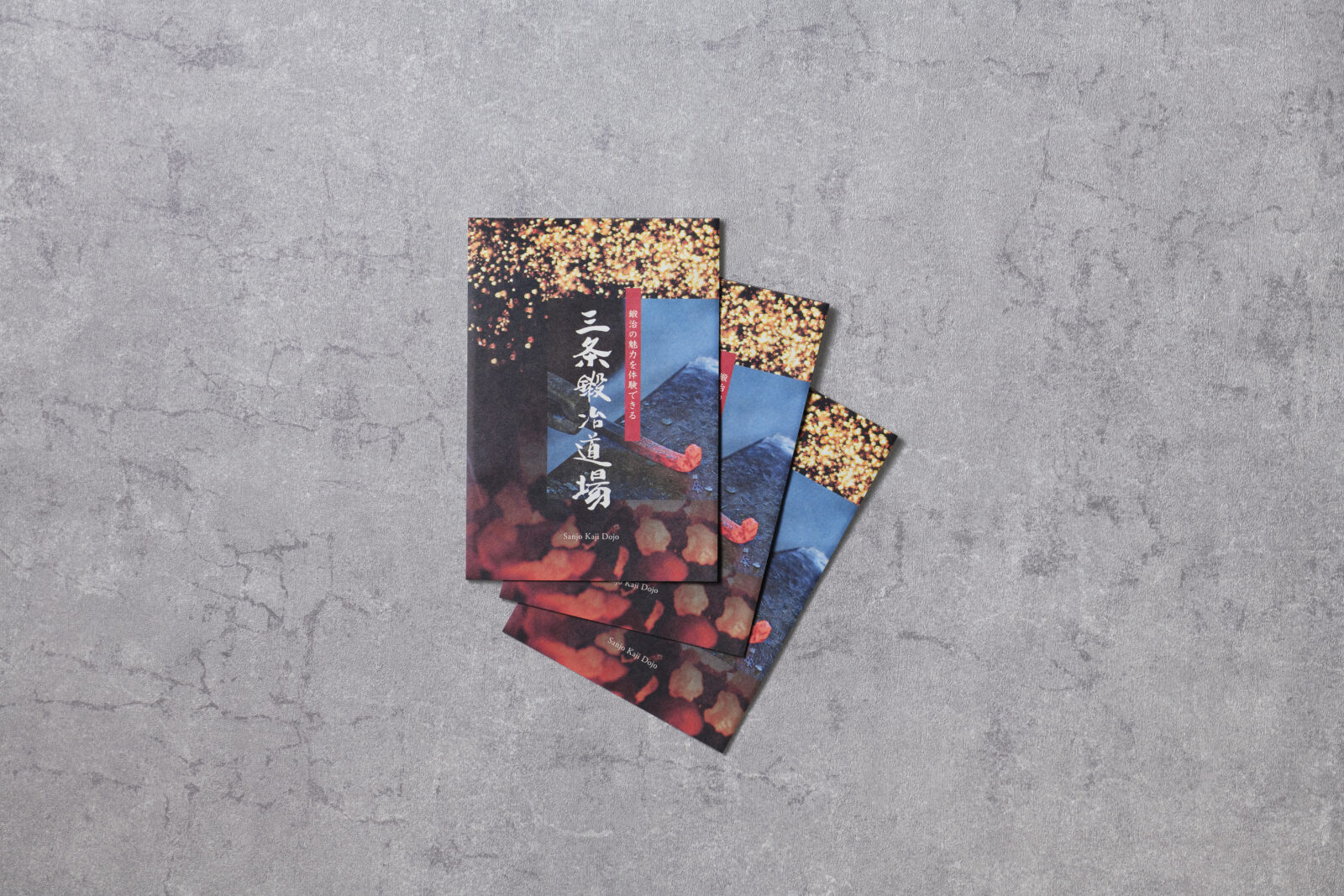
三条鍛治道場 パンフレット
Project Info
- Client:
- 三条鍛治道場
- Year:
- 2025
Client:
三条鍛治道場
Year:
2025
Credits
- Art Director:
-
- 栗山 薫(kuriyama kaoru design)
- Graphic Designer:
-
- 栗山 薫(kuriyama kaoru design)
- Photographer:
-
- 大岡 翔
Art Director:
栗山 薫(kuriyama kaoru design)
Graphic Designer:
栗山 薫(kuriyama kaoru design)
Photographer:
大岡 翔
Categories
Overview
三条鍛治道場のパンフレットリニューアルにあたり、
アートディレクション、構成設計、撮影ディレクションを担当しました。
鍛冶の現場が持つ「熱」「緊張感」「手仕事の力強さ」を伝えるため、
ビジュアル面では躍動感のある写真を軸に構成。
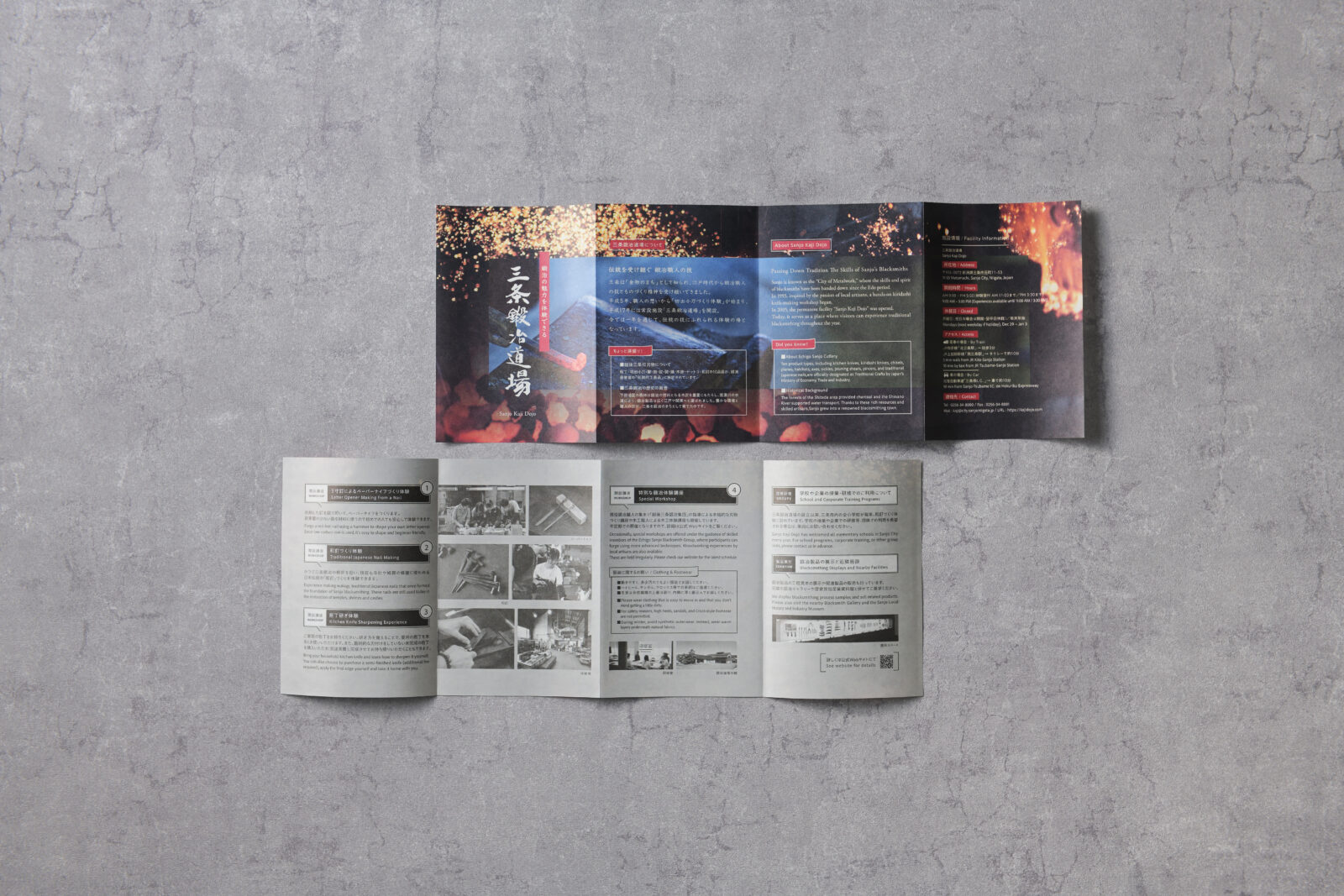
一方で、中面およびモノクロ面では、情報の整理と視線誘導を意識し、
来訪者が内容を直感的に理解できる編集設計を行っています。
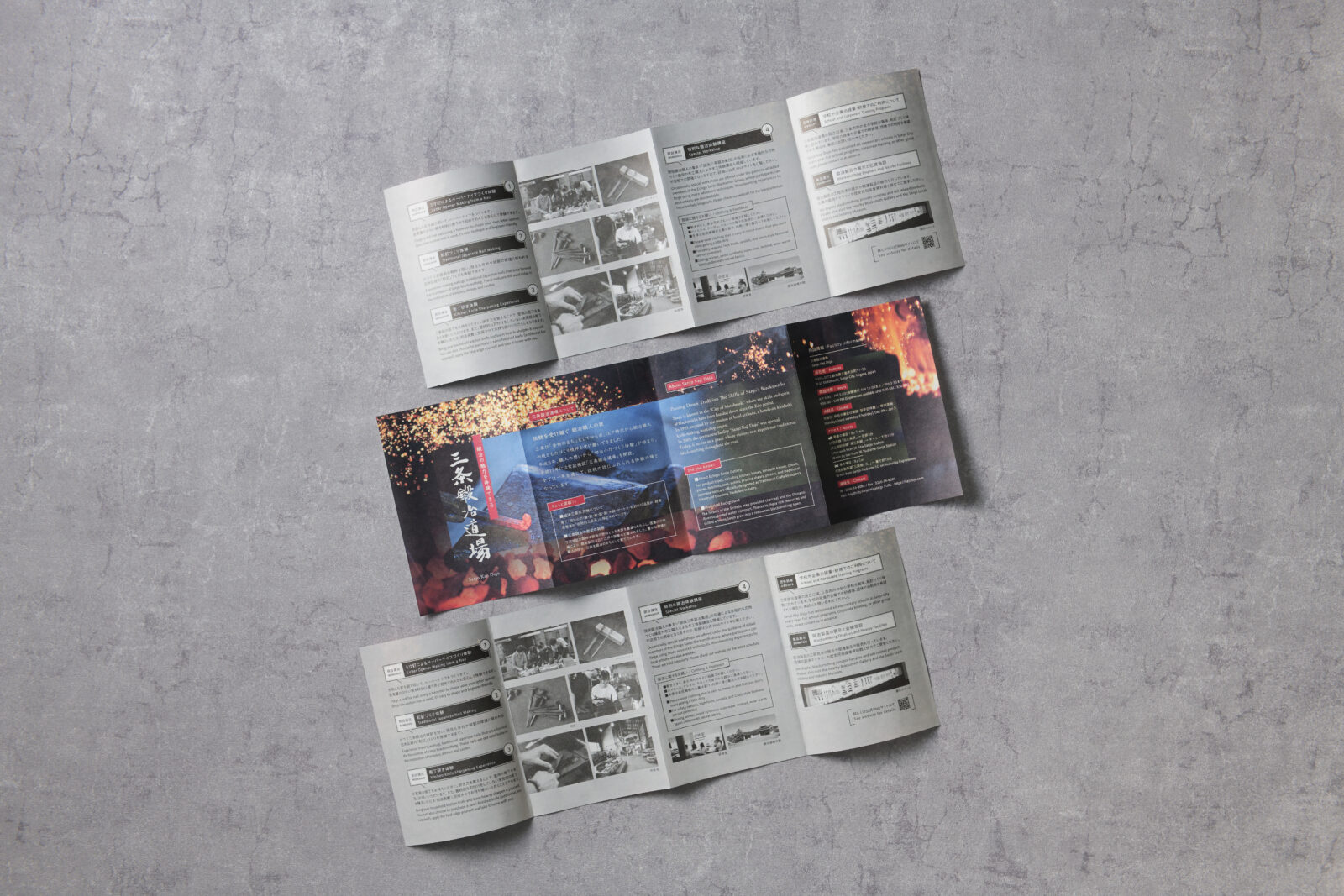
折りは蛇腹折りを採用し、
体験内容から施設情報、背景にある文化までを、
視線の流れに沿って段階的に読み進められる構成としました。
用紙には、本来は包装用紙である片艶晒クラフト紙を採用。
表面のざらりとした質感と、中面のつるりとした手触りの差が、
ページをめくる行為そのものに心地よい変化を与えます。
鍛治の荒々しさと、技術としての精度という相反する要素を、
紙の触感を通して表現することを意図しました。
また、日本語・英語を併記した構成とすることで、
海外からの来訪者にも情報が自然に伝わるよう配慮しています。
言語の違いに左右されることなく、体験の魅力や道場の成り立ちが共有される設計です。
観光施設としての案内にとどまらず、
三条に根付く鍛治文化と技術を、誠実に伝えるパンフレットです。
Sanjo Kaji Dojo Brochure
For the renewal of the Sanjo Kaji Dojo brochure, I was responsible for art direction, structural planning, and photo direction.
To convey the heat, tension, and physical presence of blacksmithing, the visual side was built around dynamic imagery captured on site.
In contrast, the inner monochrome sections were designed with a clear editorial approach, organizing information and guiding the reader’s eye so that the content can be understood intuitively.
An accordion fold was adopted to create a natural reading flow, allowing visitors to move seamlessly from hands-on programs and facility information to the cultural background of the dojo.
The brochure is printed on semi-gloss unbleached kraft paper, a material originally intended for packaging.
The tactile contrast between the rough outer surface and the smooth inner pages adds a subtle sensory shift as the brochure is opened, reinforcing the dual nature of blacksmithing—raw strength and refined technique.
Japanese and English are presented side by side, reflecting the large number of international visitors to the Kaji Dojo.
The bilingual layout was carefully designed so that the experience and philosophy of the dojo can be shared beyond language barriers.
Rather than functioning as a conventional tourist brochure, this piece aims to communicate the craftsmanship and blacksmithing culture rooted in Sanjo in a quiet, clear, and respectful manner.
All Works
Next Work